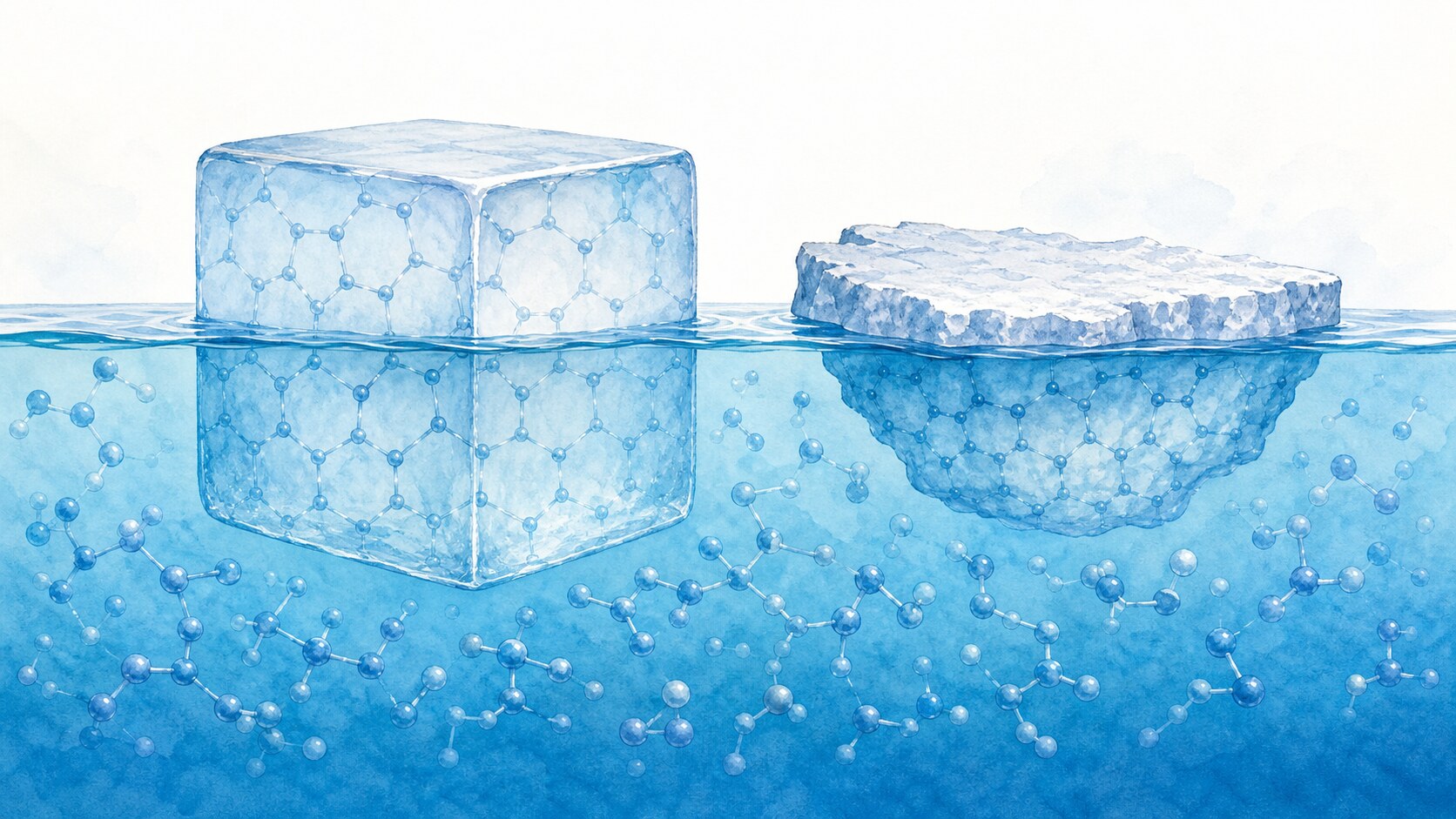
Why Does Ice Float on Water?
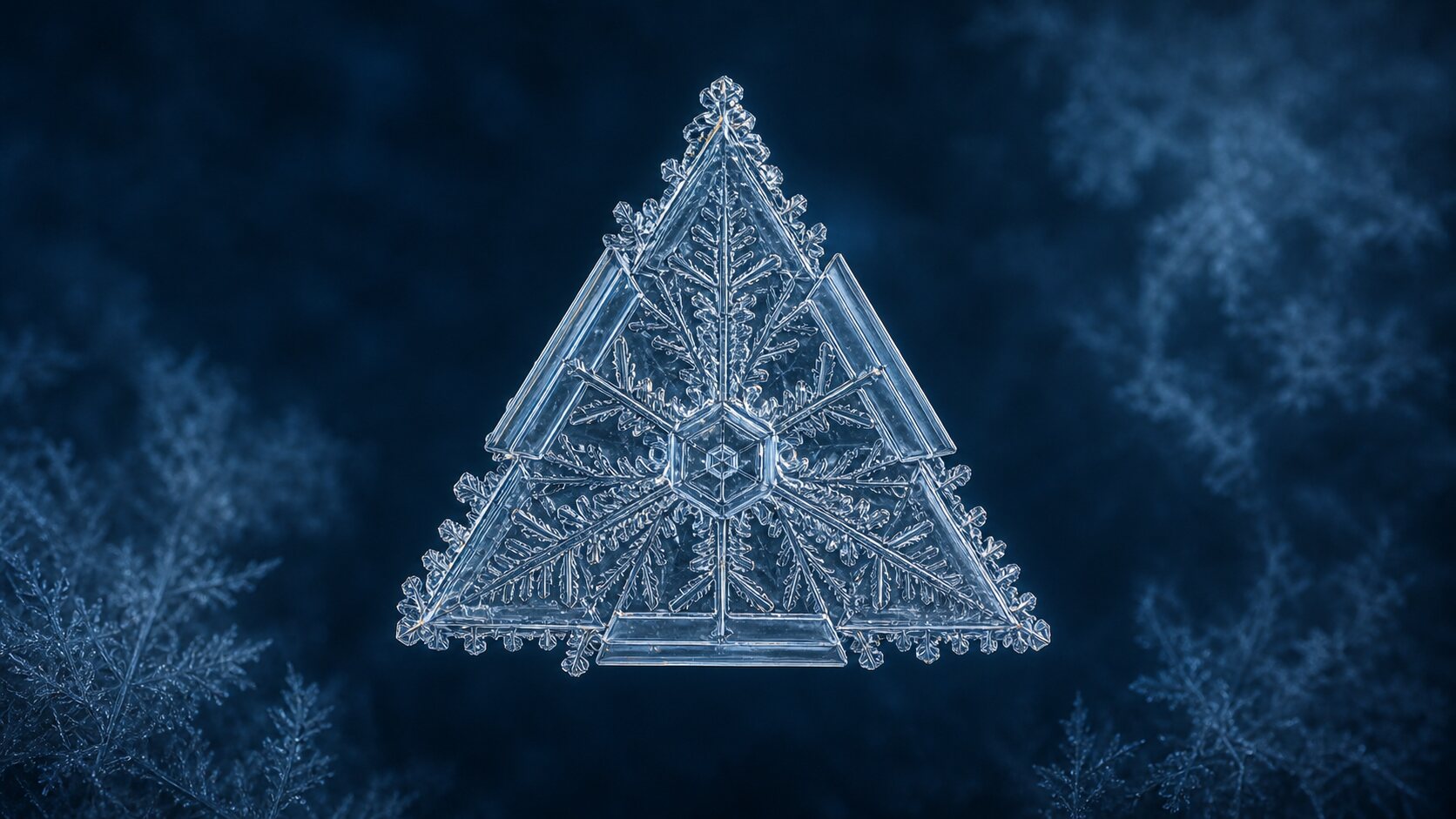
When water freezes, its molecules form an open crystal structure and expand by roughly 9 percent. The resulting lower density keeps ice afloat.
SCIENCE

When water freezes, its molecules form an open crystal structure and expand by roughly 9 percent. The resulting lower density keeps ice afloat.
July 22, 2026 · 3min read
In a standard example, the tiny droplets spread through a cumulus cloud add up to about 500 tonnes of water. A simple calculation explains the estimate—and why the cloud still floats.
July 22, 2026 · 3min read

Rainbows are circular optical phenomena, but the horizon usually hides the lower half from observers on the ground.
July 16, 2026 · 2min read

Bananas contain trace amounts of radioactive potassium, which scientists sometimes use as a fun reference unit called the "banana equivalent dose."
July 15, 2026 · 3min read

Honey jars found in ancient Egyptian tombs were still perfectly preserved after 3,000 years — here's the science behind why honey never goes bad.
July 1, 2026 · 2min read