Look a little closer
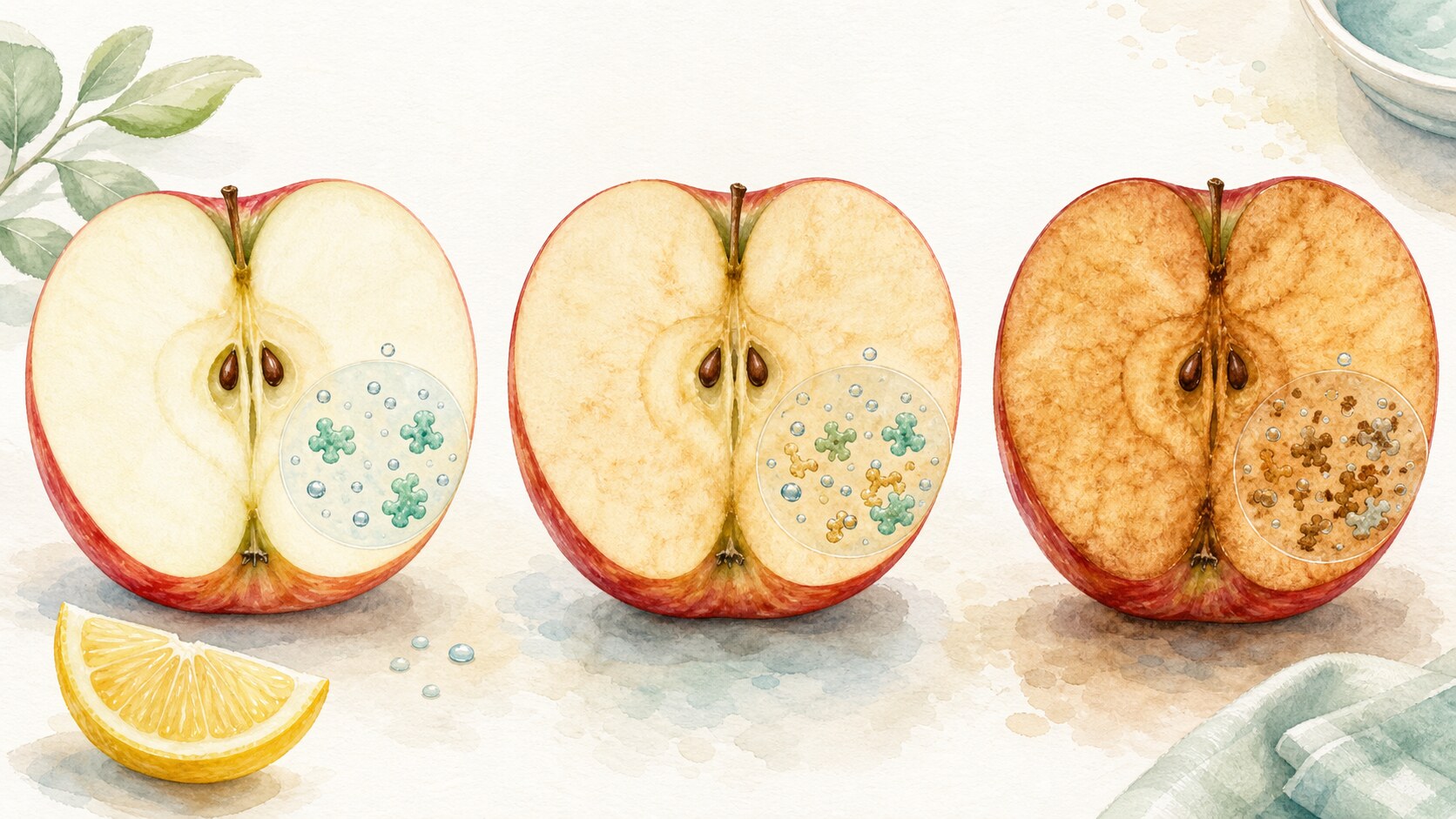
A cut apple turns brown mainly because of a process called enzymatic browning. Cutting or bruising breaks cells, bringing together an enzyme, naturally occurring phenolic compounds and oxygen that were previously kept apart. A sequence of reactions then converts nearly colorless starting materials into a mixture of darker pigments.
The key enzyme is polyphenol oxidase, often abbreviated PPO. In intact tissue, cellular compartments restrict contact between the enzyme and its substrates. When a knife damages those barriers, oxygen also diffuses into the exposed tissue. PPO then helps oxidize phenolic compounds into highly reactive molecules called quinones.
Quinones quickly combine with one another and with other molecules to form larger, darker products, often described as melanin-like pigments. Browning is therefore not one brown molecule appearing instantly. It is a network of oxidation and polymer-forming reactions that progressively changes how the damaged surface absorbs and reflects light.
The color alone does not mean a freshly cut apple has rotted or become unsafe. Enzymatic browning differs from microbial spoilage, and a recently browned slice is generally edible. Over longer periods, however, moisture loss and other chemical changes can reduce aroma, flavor and crispness, so browning is not an unlimited guarantee of freshness.
To slow browning, a cook can limit one of the reaction's requirements. Acidic lemon juice shifts conditions away from those in which PPO works best, while immersing or covering a surface reduces its contact with oxygen. Salt solutions can interfere with enzyme activity too, although a strong solution changes flavor. Each treatment trades convenience and taste against delay.
Refrigeration lowers molecular motion and slows enzyme reactions. Heating can disable the enzyme more completely by changing its structure, but it also cooks the apple. When a raw texture matters, a brief acidic treatment, reduced air exposure and cool storage are more practical in combination than trying to stop the chemistry permanently.
Apple varieties do not all brown at the same rate. Cultivar, ripeness and storage history affect PPO levels, available phenolic compounds, acidity and tissue structure. The exposed surface is a compact demonstration of cellular organization: once compartments fail, an enzyme and atmospheric oxygen can rapidly launch chemistry that was restrained inside the whole fruit.
EDITORIAL RESPONSIBILITY
FactosBrain Editorial Desk
The FactosBrain Editorial Desk researched and reviewed this article under our editorial policy. We assess error reports under our corrections policy.