Look a little closer
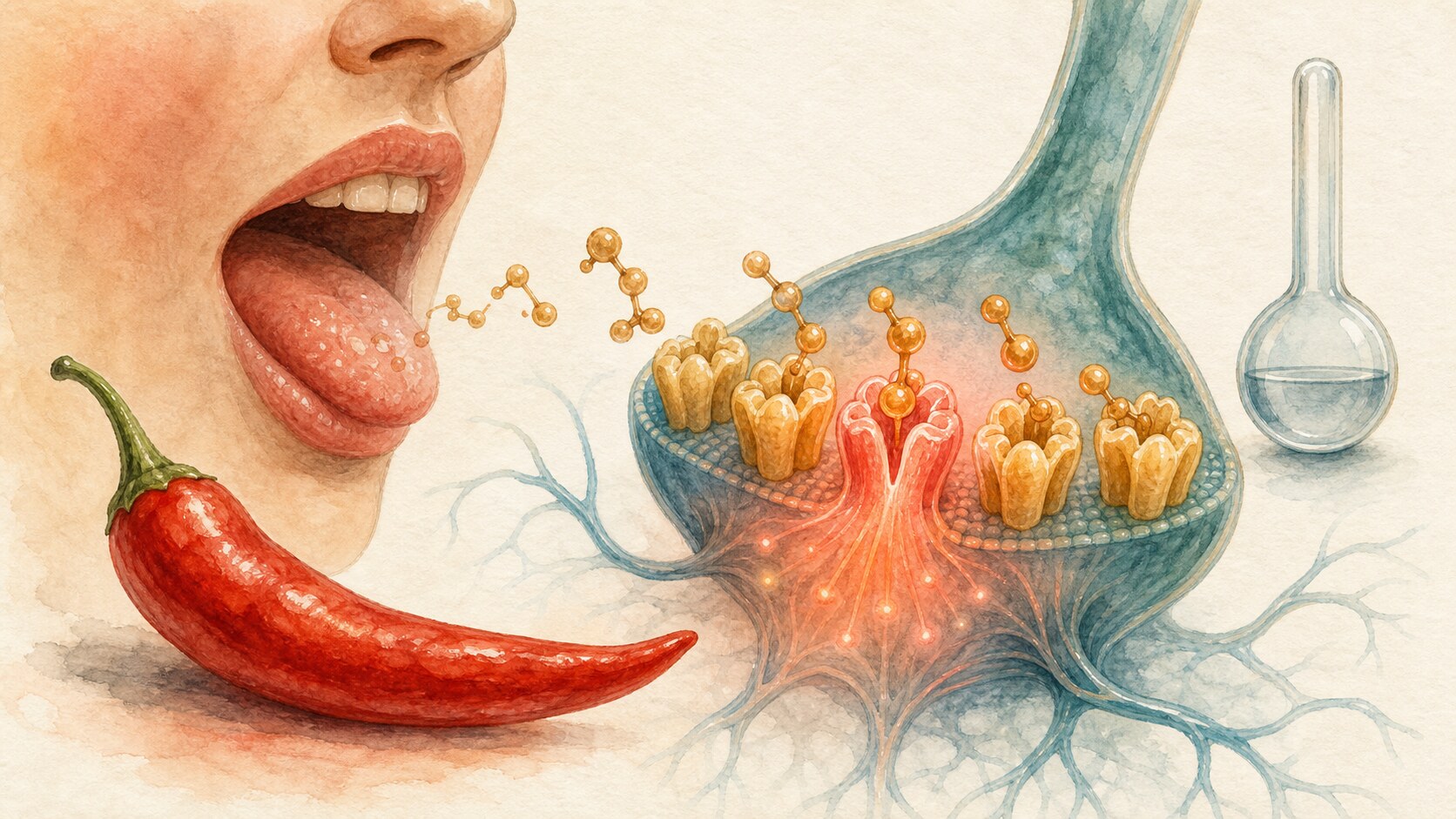
A chili pepper can make the mouth feel hot even when the food is cold. Its capsaicin activates TRPV1 channels on sensory nerves that also respond to potentially harmful heat and other irritants. The brain receives a signal that overlaps with real thermal stimulation. This experience is chemesthesis—chemical activation of touch and pain pathways—rather than a basic taste like sweet or salty.
TRPV1 channels sit on nerve endings in the mouth and skin. They can respond to high temperature, acidic conditions and several chemicals. When capsaicin binds, the channel opens and allows ions to trigger electrical activity in the nerve. The brain does not directly identify which molecule opened the channel, so it interprets the activity as burning heat or pain.
The body can react as though it needs to manage heat. Blood vessels may widen, the face may flush, and sweating, tears or a runny nose can follow. Those responses do not mean the pepper has literally raised the tissue to a burning temperature. Strong stimulation can still be painful, however, and spicy food can aggravate gastrointestinal symptoms in some people. Sensitivity and dose vary widely.
Repeated exposure can make the same pepper feel less intense. After sustained or repeated activation, capsaicin-sensitive nerves can become temporarily less responsive, a process called desensitization. That adaptation does not make the mouth resistant to actual high temperatures. Someone comfortable with very spicy food can still be burned by soup or oil that is physically too hot.
In a controlled beverage study, skim and whole milk reduced oral burn more than water, although the mechanism was not resolved and milk protein may matter more than fat. Relief still varies with the product and the person.
The Scoville scale compares the pungency associated with peppers or their capsaicinoids; it is not a thermometer and cannot predict every individual's pain. Capsaicin does not persuade taste buds that the food is on fire. It borrows a heat-and-pain sensing pathway and creates a convincing perception of heat, which is why a chilled chili can still produce a fiery sensation.
EDITORIAL RESPONSIBILITY
FactosBrain Editorial Desk
The FactosBrain Editorial Desk researched and reviewed this article under our editorial policy. We assess error reports under our corrections policy.